Sunday, September 18, 2011

Nobody Owns This Game

It took only three days to watch the 24 hours of Baseball by Ken Burns. The first inning immediately gave me goosebumps, with beautiful waterfalls of words gushing from the likes of Whitman and Costas and Donald Hall, immediately illustrating the literary, reflective, and poetic qualities that always seem to gravitate toward this great game. But it was a slow and steady descent from there. Still enjoyable, and not without its moments of real brilliance -- particularly John Chancellor's easygoing narration through nine innings, and Keith David's tenor in the 10th -- the series gradually abandons its humor, playfulness, and eccentricity and instead falls into the same rhetoric of patriotic cliches and queasy nostalgia that is more becoming of Fox than PBS. Especially in the deplorable 10th inning which never shuts up about the goddamn Yankees and those pathetic Red Sox who finally break the Curse.


Most television documentary series simply follow the prefabricated narrative already entrenched in our collective memories, so why not do something more interesting and unexpected and enlightening? To be fair, the first and fifth innings did just that. Quirky personalities and idiosyncrasies are celebrated, humor plays a central role, and there's real poetry in the words and images. But the lingering images and stories are inevitably those of the latter innings, still fresh in the memory, and still stinking of sentimentality and sensationalist journalism. Hardly any players and no ordinary fans are interviewed. And in the 10th inning especially, we learn jack shit from the fatherly blatherings of some wealthy white BoSox columnist yacking on about Yawky Way providing an emotional bond between him and his pug-nosed son. Are we supposed to swallow this horse shit as if it means something to the rest of us?


Aw, I'm sounding like a sour old man. The series is definitely worth watching. But the series must go on, if only to redeem it from falling into a kind of hokey purity where the cursing and fun have vanished, replaced by stuffy old stiffs whose seriousness about scandals is just plain laughable, man. And enough with the goddamn national anthem already! Only the 8th inning, which starts with the infamous Hendrix recording from Woodstock, has any value after the first inning's predictable opening of blaring and honking horns playing the star spangled banner. Jimi's version shimmers as it always has; an epic departure from the status quo -- much like the social life and the style of baseball in the 60's and early 70's -- which were introspective and critical of stolid American institutions, and therefore insightful and provocative, paralleling the electrifying and truncated careers of players like Clemente and Koufax and Curt Flood. Disappointingly, these are the only three players discussed in any depth from this era, which otherwise is brushed over in favor of continual fawning over the dynasty teams.


It would've been more becoming of a PBS documentary to provide some insight into the smaller market teams, unsung players, and eccentric baseball cultures across America. Or to examine in depth one of the most amazing phenomenons in baseball history: Shadow Ball. The superficial treatment of such a complex practice didn't do it justice. In the tenth inning, nobody even comments on baseball finally coming to the great city of Denver and all the unique things about the Rockies playing mile high baseball, and how it has changed the game (statistical controversy, the humidor, etc.) Moreover, baseball isn't just "our game" as Burns and co. posit -- it is also the national sport in several other places around the world; the national teams of which usually kick the shit out of "our" boys. Cuba and S. Korea aren't even mentioned, and what little is said of Japanese or Caribbean hardball is of only passing interest to the director.


On that note, I just sent my dad a copy of "21" - the recently published graphic novel about Roberto Clemente, his favorite player. The text might not be great, but the illustrations provoke the imagination to wonder what he looked like playing with such exuberance in real life. And I'm finishing my copy of "A Zen Way of Baseball" by Sadaharu Oh tonight and will try to write a piece about it. Not familiar with the world's leading home run hitter of all-time? Not surprising; Burns and the gang fail to even mention his name once.

Thursday, June 30, 2011

Push it Fair

The mlb network recently revealed the top spot on their melodramatic list of the top 20 Greatest Games played in the last 50 years...

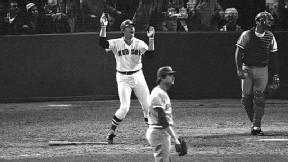
1975 World Series, Game 6 - Fenway Park
Big Red Machine vs. Boston Red Sox
Reds up 3 games to 2

Last year, after the Giants won a thrilling World Series, several of us experienced that immediate, gut-wrenching sensation of off-season withdraw and thus threw in an old videotape of this all-time classic.

Copenhagen, November 2010-

We can hear the ancient green ballpark groan at season’s end, worn and weathered under the dirtywhite nightlights beaming dimly on the weathered grass and infield dirt. The faded, grainy VHS image could be of any old baseball field on any one of those damp and frigid nights in late autumn. But it’s not. It’s Fenway in October. Those dizzy dimensions and that palpable anxiety are dead giveaways. We marvel drearily at the many nuances of mid- 70’s Americana: post-Nam exhaustion mingling with stubborn Irish hope; tweed jackets with elbow patches on flailing professor arms; clumsy on-screen text graphics generated by the world’s first computer; and most impressive of all, the personal style of the ballplayers…


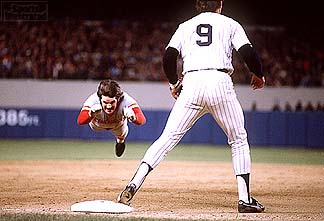
Louis Tiant gesticulating with Satchel-like spasms and an array of flamboyant windups refuses to let the Big Red Machine find a groove in front of his Papi – "the Carl Hubbel of Cuba" beaming with joy under his dark brown fedora, shrouded in cigar smoke and untold tales of triumph. Pete Rose all coiled up in clenched stillness, waiting to strike from the left side; steps toward the ball, but holds up, his hands hang back on a slow curve…a hard twist of the hips and he rips a single to right-center. Fred Lynn: ROY, MVP, WS 3-run homer, and then busts his tailbone slamming into the centerfield wall. Joe Morgan’s back elbow flapping up and down in the batters box, his loose and sure fielding sure has style. And all the big hits by low profile players: Cesar Geronimo, a heroic name at a heroic moment, probably gave birth to a son named Sitting Bull Machiavelli, homers to put the Reds up 6-3. Then Bernie Carbo, looking overmatched at the dish, suddenly smacks a game-tying homer while drunk and stoned.
 

Cormac McCarthy could’ve said this old park hums with age and mystery. Yet from another angle, Fenway seems virgin – classic and pure – patiently waiting for a miracle to break that dreadful Curse. Foul ground and outfield walls not yet polluted by slogans and logos. Every blade of grass and craggy corner acquiescing to the grandeur of the green monster.

-Check it out, man…no fucking ads on the field or the backstop. It’s beautiful.
-There’s Sparky in the dugout, Wes…
-Mmm-hmm
-Toorn dees sheet auf, mahn. Beisbol boring!
-Shut the fuck up, Eduardo. And show some respect for Sparky; he just died.
-What da fuck is Sparky? Who cares?
-Here, take the doobie, CW
-Ooo….nice
-No goddamn ads or flags or flyovers…just baseball. It’s fucking beautiful.

Bottom of the 9th, runners at first and third with no outs, left-fielder George Frasier makes a concentrated catch right at the stands in shallow left and heaves it hard past the noses of nervous on-lookers leaning in to see if Doyle can tag and score. Shouldn't he have tried to slide instead of dive? Probably. The double play kills the inning and quiets the crowd. Everyone here is asleep, scattered on the floor, in the hammock, on the couch and I’m too tired to go into extras. Fisk will have to wait till tomorrow to hit it…


Late morning.

A couple dudes still sleeping on the floor, one in the hammock. The VCR clicks into motion and Joe Morgan strokes a fastball for an opposite field hit. Fast forward. Morgan again, snapping a throw on the run right into the first baseman’s glove with perfect nonchalance. Nothing too flashy, no big stats for this game, but making his presence strongly felt. A complete player with both bat and glove, he won the most prestigious individual awards and team championships before entering the Hall and working the mic on Sunday night baseball telecasts with Jon Miller. 


Fast forward to the top of the 11th. Ken Griffey Sr. on first. Morgan pulls one to deep right field, Evans sprinting toward the tiny wall, Griffey sprinting around the bases -- confident it'll go over the short fence or drop for extra bases -- and Evans makes a spectacular if awkward catch with fans hands all around him. He turns and immediately chucks the ball toward first base, off-line but in plenty of time with that strong arm to double-off Griffey.

“The best game I ever played in” – said by a guy who loved winning more than anybody. Pete Rose, a notorious competitor (who even gambled 10,000 bucks per game on his team finishing 162-0), yelled out after Carbo's homer, "This is fun!" Dude should be in the Hall.

And, of course, 12th inning…Fisk waves it fair.  The media thus found a way, serendipitously, to sensationalize the game, pre-fabricating narratives and placing cameras everywhere to plan for shots like Fisk hopping up the baseline. This time, though, it was accidental and for that very reason, magical. And the mytho-poetics of this great sport continue to express themselves in popular culture; in mediocre film (Good Will Hunting), high-brow literature (DeLillo’s Underworld), and on the internet (Dock Ellis & the LSD No-No). That majestic homer off the foul pole means the Red Sox live to see another day.


And finally she yawns – a silent roar – creaking under the weight of rowdy fans flooding onto Yawky Way with that stubborn hope still in the air, ‘cuz maybe some damn miracle might release us from this Curse -- tomorrow night in Beantown in the seventh and final game versus the Big Red Machine, with The Spaceman on the mound.

But the Game had become and continues to be “more Machine now than Man….twisted and evil,” reflected not so much in Vader-like villains of yesteryear, (the recently deceased Steinbrenner comes to mind), but the robotic, joyless, business-like metamorphosis of ballplayer into corporate cog. The blind consumer that is the Fan. More subtle then, strikingly obvious now. And as the Machine prevailed in the past, it does so today with an even greater autonomy free from human intervention. And the Spaceman loses.

The Machine is also dominating the way we humans perceive, interpret and appreciate baseball today. Rather than raging in anger at the removal of our favorite players from our favorite teams, we placidly accept the supremacy of a mechanical kind of logic positing greed as the strongest motivator in a multi-billion dollar industry crawling with blood-sucking agents and empty-headed athletes. Ticket prices continue to rise as our teams turn into souless corporations and continue to be disfigured beyond recognition. Fans are arrested at ballgames for not sitting through the Bush-era war chant of “God bless America”. The 7th inning stretch not only stretches our patience with all of the hokey patriotism and jingoist arrogance, but is in itself a stretch in its pathological attempt to link the game of baseball with military might and flag-waving herds of passive consumers. It stretches the thruth like so many other lies of the Bush era, refusing to acknowledge that beisbol is an international game with international citizens who happen to play in the US and Toronto and some of whom are deeply offended and saddened by such contrived nationalism (high-five, Carlos Delgado).


On yet another militant level, the violent mechanism of the Police and their intimidating presence – shooting taser guns at foolhardy fans for nothing more than running on the field – adds to the paranoia and dehumanization of our culture at large, and baseball in particular. In the past, it was we Fans who determined when we would run on the field together (see one of "Baseball's Best Moments": KC vs. NYY 1977, Chambers HR), in a triumph of joy over security.


And, again, the Machine now consumes a new discourse, dictating the way in which we value life, players, and how we value the Game – this time all according to strictly quantifiable sets of subjective criteria.

We can ask ourselves, without a trace of nostalgia, where are the Charlie Hustles of today? A guy who could coach and play (balls-out) simultaneously, all while using that passion and cockiness and wealth to gamble on his team to win every fucking game they played in.


Not even bothering to interview Rose along with teammates Morgan and Bench, the demeaning mlb network removes the wild card from the deck, playing it safe, tossing the same pre-written softballs to the dumb jocks and watching their woozy and bloated heads blather on about the same story they’ve told a thousand times in the same way. But these dumb jocks were great players and played hard and smart baseball to beat the Beantowners in that conveniently forgotten seventh and final game. The Big Red Machine were World Series champs.

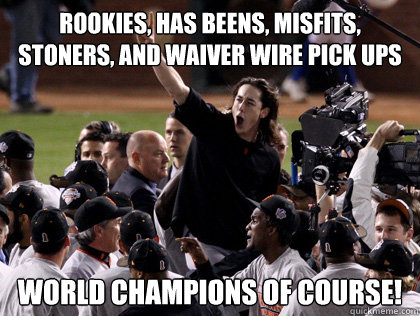
Now, in 2010, Brian "The Machine" Wilson and that magical mess of misfits shut down the over-pumped Texas sluggers to win the World Series. Reluctantly embraced by the Machine proper, even the misfits had to be commodified. Fake coal-black beards, Kung-Fu Panda outfits, and even Torture Ball as a brand are all assimilated into the Machine as part of the corporate takeover of baseball culture. And we, the fans, are a bunch of suckers.

Welcome to the Machine.


Monday, June 20, 2011

BroadCasting

The cleanup man whips around and yells something at the pitcher, his furrowed brow and flexed neck muscles ready to explode. Hesitating, the ump decides not to issue a warning. The slugger finally makes his way down to first base. Two guys on, two runs in, only one out...


Listening to the ESPN Sunday Night Baseball goons regurgitate the nerd lingo dictated into their earpieces, I can’t help but feel a sad longing for the days of Joe Morgan. But remember, he was fired from the network. Probably for the best. Well, actually, not really. The best voice in the game, Jon Miller, was also canned. But still, there was something soothing about Morgan's voice and the fact that my grandpa always thought he was the world's greatest player - and by extension - announcer.

Vin Scully is now the last dinosaur of baseball broadcasting and it wouldn't surprise me if Dodgers brass hovers around the old man after every game, asking him about his health while offering him some deep fried garbage. Baseball television broadcasts are in a disturbingly clone-like era where Fox seems to have replicated the Buck/McCarver two-headed monster in each city. At least Morgan and Miller were silly and different. Will Fox dare to give Scully the hook at some point if he shows a similar unwillingness or inability to become a corporate stooge? Morgan was not willing or able. In fact, I'd like to think the conversation between Morgan and ESPN went something like this:

ESPN: Mr. Morgan, we’d like for you to repeat the statistical information given to you in your earpiece, word-for-word.


Joe Morgan: What the fuck are you talking about?


ESPN: Listen, Joe… The game is changing; how we look at the game is changing. There are a lot of hard-working people coming up with new and better statistical categories for evaluating productivity. And you need to cooperate here. We’ll have our statisticians tell you what to say and all you have to do is repeat it; just throw it out there for the audience to latch onto.


JM: I don’t need to be told what to say, like some goddamn puppet. I’ve been around this game my whole life. Don’t you think I know how to evaluate a player based on my intimite knowledge and experience of the game? I can sense when a player is pressing; you can feel it in your belly when the runner on first is gonna steal; my instincts tell me more about how a pitcher should approach a batter in a given scenario, far more than new-age stats will ever do.


ESPN: We’re not asking you to do this Joe; we’re telling you this is part of your new job responsibilities as a color commentator. You’d be wise to read up on the new stats and get familiar with the terminology.


JM: I’m not gonna sit around repeating a bunch of numbers babbled in my earpiece all game, throwing me off and preventing me from sittin’ back and observing all the little things between the lines. I know what I’m talking about here.


ESPN: Joe, this is the direction in which the network is already going full-speed ahead on, and you’re just holding us back at this point. Perhaps it’s best if you reconsider your position with us.


JM: I’ve been doing Baseball Tonight for over 20 years, helping to make it the most popular weekly baseball event on tv, and this is how you show your appreciation and loyalty?


ESPN: We’re giving you a chance to keep your job by adapting to our new vision on how to announce baseball games based on Sabermetric research.


JM: No. You’re telling me how I should perceive the game and forcing me to communicate my observations in quantifiable statistical categories instead of letting me continue to describe the qualitative aspects of movement, process, situation, and sensibility.


ESPN: For the last time, Joe, we’re not asking you to get on board with us. We’re telling you where the ship is sailing and expecting you to do your part or find another job.


JM: Then sail your fucking ship as far away from me as fast as you can. I’m done.


...alas, the conversation was probably nothing like this at all.


Listening to Bobby Valentine talk about the great left-field play of diminuitive Brett Gardener last night, he stumbles over some strange sentences whispered into his earpiece,

“Gardener is second in the league to…Parra…uhh…among left-fielders …with…uh…thirteen…runs…uh…prevented. Yes, thirteen runs saved.”

Obediantly repeating the words like a good corporate stooge, but sounding like a tool in doing so. “He’ll learn,” the ESPN producers cry, “at least it’s better than Morgan not broadcasting anything we tell him to say.”

Orel Hershiser talks exclusively about pitchers and their challenges and accomplishments. He’s not been heard from for an inning or two, as he’s probably been told to recite and record a prepared interlude constructed between innings on pitch sequences to specific batters and how to approach a hitter the second and third time around. Suddenly, we hear his voice, after a prolonged absence, chime in with haste and overconfidence to tell us about how and why Sabathia attacks Soriano, pitch-by-pitch.

Don't get me wrong; the dutiful dictation done by these three elderly, wealthy, white men in stiff suits, starched shirts and in their square booth is more informative and analytical than an old Jon Miller/Joe Morgan broadcast, without a doubt. But in their attempts to analyze and criticize every nuance of the game and to quantify as many variables as technologically possible, they fail to let the game reveal anything surprising or unexpected to them or to us; they don’t allow themselves enough time to enjoy the game being played right in front of them. And we sure as shit don't feel like part of a conversation.

The aesthetics of the game are wiped away; style no longer has any substance. Personality is only interesting in so far as it can be absorbed into the Monoform. Nick Swisher with a shit-eating grin on his face sure looks good in those Norelco shaver commercials, eh guys? And he’ll make a great tv personality one day, so watch out – he might be here in the booth sooner than you think!

Grooming and manipulating and engineering forces, like the Emperor, to succomb to the dark side (negative, reactionary forces). Or striving to constrain or destroy positive forces (affirmative, active forces) by breaking them up – like the Jon Miller/Joe Morgan tandum – out of a deep-seated resentment toward human interference; nothing more than rusty cogs in the corporate machinery.

So baseball fans are relieved of an old stick-in-the-mud announcer, too damn stubborn to bend toward this new nerdball movement. Yet, we're left with a trio of petty, stiff and sanctimonious dweebs doing what they’re told, keeping an air-tight broadcast free of any unanticipated variables that might fuck with their pre-fabricated storylines; constraining and controlling the interpretation of the game to a single monolithic narrative, replete with a televisual grammar and logic that works the audience over, pounding us in the gut again and again with the same silly sequence of shots – strike three, zoom-in on pitcher who struts around the mound in confidence, cut to batter walking back to dugout with head down, then looking toward the field as if staring at the pitcher (“I’ll get you next time”), but is actually just passively watching the replay on the jumbotron; cut to establishing shot of stadium for an enthusiastic endorsement of some corporate product; cut back to centerfield camera for the next at-bat; repeat.


Why don’t we ever get to see how the infielders throw the ball around-the-horn after a strikeout? How they might be getting into the game, and if they look tense or playful when doing so. We need to hear the silence of between-inning breaks; the hum of the stadium organ, the murmur of the crowd as they do “the wave”, the indecipherable words of the p.a. announcer low and soft in the background; and the sight of the grounds crew working the infield over, players running out to their outfield positions to toss lazy fly balls to each other, the pitcher’s warm-up throws, the batter studying the pitches from the on-deck circle, “coming down!”…

And I continue to wonder why me and my buddies can’t have a crack at announcing games. Spontaneous, but well-informed. Teaching about the new statistical categories as one of many ways to appreciate the game. Full of humor and wit and exuberance. Aware of mistakes made, but highlighting the achievements and positive contributions done on the field. And with a lot more audience-involvement.

For starters, challenging baseball fans to discuss forming a Fans Union together so we can, among other things, claim the right to overthrow bad television and radio announcers that make listening to our hometeam a painful obligation instead of the stirring and thought-provoking experience it can potentially become.


The catcher has been out to talk with our hurler. He says little. Each man knows what is needed. First pitch fastball on the outside corner for strike one. Second pitch fastball away. Third pitch fastball inside, fouled off. Fourth pitch slider low and away. 2-2 pitch, changeup, low...

It's a grounder to short...6...4...3...double play. Mercifully ends the inning.

Sunday, April 10, 2011

Sam Fuld's Catch

Now the clean-up man steps up. Our pitcher is sweating profusely. Licking his chops, with a man in scoring position, the slugger has him right where he wants him. The southpaw in the stretch, checks the runner at second, stares in at the hefty hitter on the right side...

We don't have SportsCenter out here in Copenhagen, so we haven't been smothered with images of great moments like this in an endless repetition without reflection, emptying the moment of its beauty and meaning.

With Manny gone, Damon looks to do the DH'ing as the Rays now turn to a defensively-strong outfield, relying on one particularly scrappy and unproven player:

Sam Fuld - RF
Tampa Bay Rays

Last night, the bases loaded with ChiSox and Juan "in a million" Pierre at the plate, something utterly amazing happened in the outfield. Smallish Sam Fuld was playing Pierre shallow in right. Pierre skillfully pulled the ball toward the deepest corner of right field. At Fuld speed, this dude sprints after the soaring drive with the dedication of a pit bull after a frisbee. In Fuld stride, he literally FLIES -- recklessly and freely -- headfirst onto the gravel warning track, glove and body Fuldy extended to retrieve the sure-thing triple... It lands perfectly in the pocket of his outstretched mitt, as he's gliding in midair. Sam lands and slides awesomely through the warning track, turning onto his side right up to the base of the wall - and stopping millimeters from it, like an expert stuntman.

Even the fat and rowdy beer guzzling Southside boys behind the fence couldn't help but show their aggressive admiration, as the diminutive Sam Fuld jogged joyfully back to the dugout, briefly checking his left elbow for marks, beaming with childlike pride. It was beautiful.


p.s. 4/12/11


After "the flight" he took to prevent an inside-the-park grand slam, Sam Fuld promptly robbed Dustin Pedroia of a double last night at Fenway with a great diving grab.

But that's not all.

He fucking roped a homer off Dice-K right around the Pesky pole - like a gritty old player of the deadball era. Then in his next at-bat blooped a pitch to left-center field and stretched it into a double with a hard head-first slide easily beating the tag. He then showed-up his defensive counterpart Ellsbury in the outfield by driving one deep over his head - but not out of reach - "giving him the chance to make a great play", as Jacob of the Bare-Knuckle Boxers put it.

As a grand finale, needing only a single for the cycle, he slices a line-drive to left that's hit too hard for Crawford to cut-off and excitedly, instinctually rounds the bag and glides into second for his second double and no cycle.

Who is this guy?


...the sign is for a fastball high and tight. The hurler nods in approval, comes set. And the pitch...the two-seamer sails on him...heading for the slugger's head...he jumps while turning away...and it beans him in the back.

Saturday, April 9, 2011

Moons Over My Manny


Dreaded slugger of epic might
Joyful jester who kept it light
Did some drugs
Jacked some dingers
Peed on rugs
The smile that lingers


...he swings!
He rips the fucking cover off the ball
It bajooms of the left-centerfield wall.
RBI Double

Monday, February 28, 2011

Razing Arizona & a Rocky Road for the future

With one out, a guy on third and the no.3 hitter up, the team up to bat must score. It's imperative; but far too often that runner doesn't score. Presumaby the team's best hitter, the no.3 guy will drive in that run with either 1) a hit, 2) a sac-fly, 3) a grounder to the right side of the infield, or 4) a squeeze bunt. The fourth option is literally NEVER attempted, although its probability for success may be greater than all of the other options, especially when ahead in the count. The typically bloated egos of both manager and hitter are no doubt partly responsible for their unwillingness or inability to pull of the squeeze play -- it's not a play that exhibits masculine prowess -- but there's another weakness on their part that seems even more disappointing. The fear of danger and deviance.

A failed squeeze play is just as exciting as one that succeeds. But the chances of a squeeze succeeding in the right situation are no more risky or prone to fail than any of the other scenarios outlined above. But for some reason, sports fans are quicker to chastise strategic guile and daredevilry and abnormality than we are to condemn conservative decision making when it fails.


When applying for that mlb "dream" job, they demand you send in a video clip answering some questions, which I'm unable and too lazy to provide. The job's fine print reads like a probation sentence; but watching and commenting on all that baseball could be crazy and fun, especially if they pay up big. One question on the app asks: "What will be the biggest MLB storyline of 2011"? To which I proclaimed 2011 to be the year we initiate a Fans Union. Shit, the timing couldn't be better!

Watched the Rox archived spring training opener yesterday in its entirety, and there were several interesting things to note...

1. This Salt River facility at Talking Stick is perhaps the most vainglorious land seizure of Indian territory for white man's recreation in recent American history. A casino, shopping village and golf course surround the excessively large baseball wonderland, providing several more reasons we should all burn that feckin' state to the ground.

2. The taboo of building white man's bullshit on Indian burial ground -- like cutting down a magical fairy tree in Ireland -- has long been an effective myth in preventing the objectification of the earth for capitalist ends. Those who fail to heed these mystical warnings are punished by having two of our star players collide in foul territory on the first batter in the first inning of the first spring training game ever on this field. Let that play not be forgotten, as it no doubt portends future disasters of cosmological proportions.

3. After grounding into a d.p. and moving sluggishly behind the dish for a couple innings, Chris Iannetta further demonstrated he's not our best catching option. Add to this an amazing at-bat by Jordan Pacheco, some great footwork and pick-off attempts from McKenry, and the promising past of Mauer back-up, Morales, the Rox have plenty of better options to go to this year, which could make our catcher not a weakness but an asset.

4. Dexter Fowler looked good from both sides of the plate and hit the ball hard both times. Top 3 defensive centerfielder in the game could be in for a solid season at the plate, which would be HUGE.

5. Johnny Herrera continues to show he's got the best batting eye on the team, good speed, and a solid glove at 3B. Goodbye Strikeout Stewart, you and Iannetta need to be traded for a young firstbaseman.

6. Good to see the vets put a HURT on the ball in each at-bat: Wiggy, Lopez and Jacobs all looked mean and confident up there.

With that said, here's my immodest proposal to J.T. for 2011 --


Suggested Rox opening day lineup:

1. Herrera - 3b
2. Fowler - CF
3. CarGo - LF
4. Tulo - SS
5. Lopez - 2b
6. Helton - 1b
7. Pacheco - C
8. S. Smith - RF
9. Jimenez - P


The third base coach is flashing signs to the no.3 hitter who, out of habit, looks back with feigned seriousness as if there's even a remote chance the squeeze is on. Nobody in the stadium expects it. The aging hot cornerman is standing well behind the bag. The man on third gets a very healthy lead down the line...the pitcher decides to work from the windup...staring straight ahead, focusing on the batter as he's been told so many times.

The runner anticipates the exact moment when the pitcher will initiate a series of subtle and coordinated moves -- looking down at the very instant his glove starts to rise upward while his weight rocks backward ever so slightly -- and he's off! In a sprint down the baseline against a 90mph fastball, with only the pitcher's windup giving him a small headstart. Is it a straight steal of home!? Can't be! Impossible! And the pitch comes in at 85mph right down the middle...our no.3 hitter in his head knows how to square up to bunt, but his body refuses.

This watermelon looks so juicy, just floating in there all big and round and right down the pipe! Give it a hack and hit it out of the park; it's worth two runs instead of only one. Simple fucking math! Adios, pelota....

And then....

Sunday, June 20, 2010

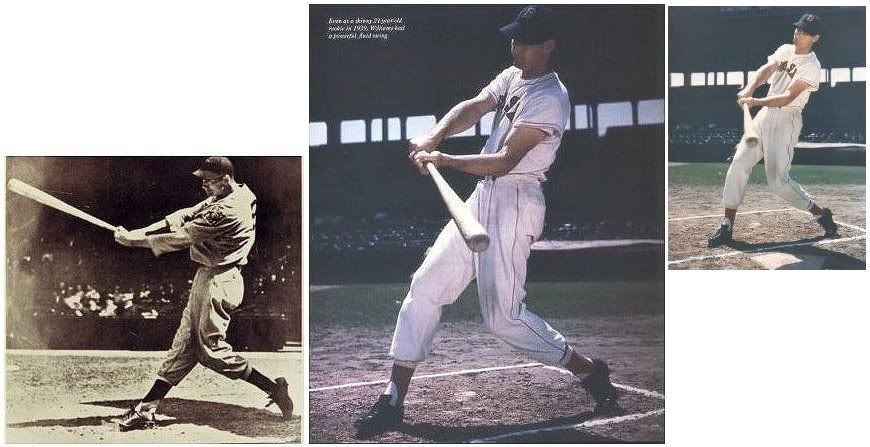
Miyamoto Musashi and the Splendid Splinter


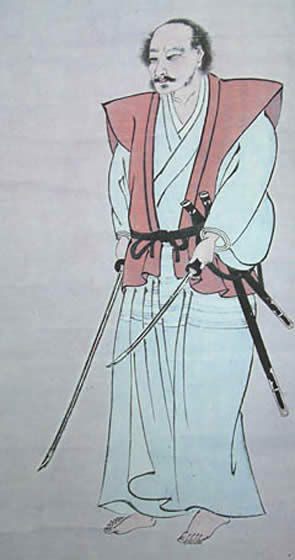
Miyamoto Musashi
:

Japanese Swordsman
Samurai Warrior
Painter (Self Portrait on left)
Author of The Book of Five Rings


Ted Williams:

American Batsman
"The Splendid Splinter"
"Teddy Ballgame"
Expert Flyfisherman
Ace Fighter Pilot
Author of The Science of Hitting


These two wizards take a no-nonsense approach to articulating their craft. Without getting too technical here, if we apply Musashi's 5 categories (or "rings") to William's text, the art of both samurai swordsmanship and that of hitting a baseball show interesting parallels. Here's a very quick glance...


Earth -

The Sword: martial arts, leadership, and training are analagous to building a house

The Bat: good, solid base (digging in with the back foot, slightly closed stance w/ front foot open toward pitcher, up on the balls of your feet, balance and weight proportioned evenly, butt and hips ready to start it all), practice, practice, practice.

Water -

The Sword: style, basic technique, fundamental principles

The Bat: fluid flow of power starting with backward cocking of hips to the single motion of hips followed by hands and finally arms

Fire -

The Sword: the heat of battle, different types of timing

The Bat: battle between batter vs. pitcher, hitting the ball hard, focus and concentration, aggressiveness, the importance of timing together with anticipation

Wind -

The Sword: "wind" is the same character as "style" in Japanese. Musashi describes the failings of contemporary schools of swordfighting

The Bat: one's style of hitting need not be changed. Williams describes the failings of contemporary schools of hitting/bunting

Void -

The Sword: zen-influenced thoughts on consciousness and the correct mindset

The Bat: "hitting is 50% from the neck up"


That was a big out. 
There's some serious swagger in the next hitter as he lifts his lumber out of the on-deck circle.
There's a meeting on the mound...